Last year, the AI Futures Project released AI: 2027, a fictional, doomsday thriller about the emergence of artificial general intelligence (AGI) and its devastating after effects. At the time, it went viral and a lot of ink was spilled debating its plausibility. Vice-President J.D. Vance had even claimed to read it.
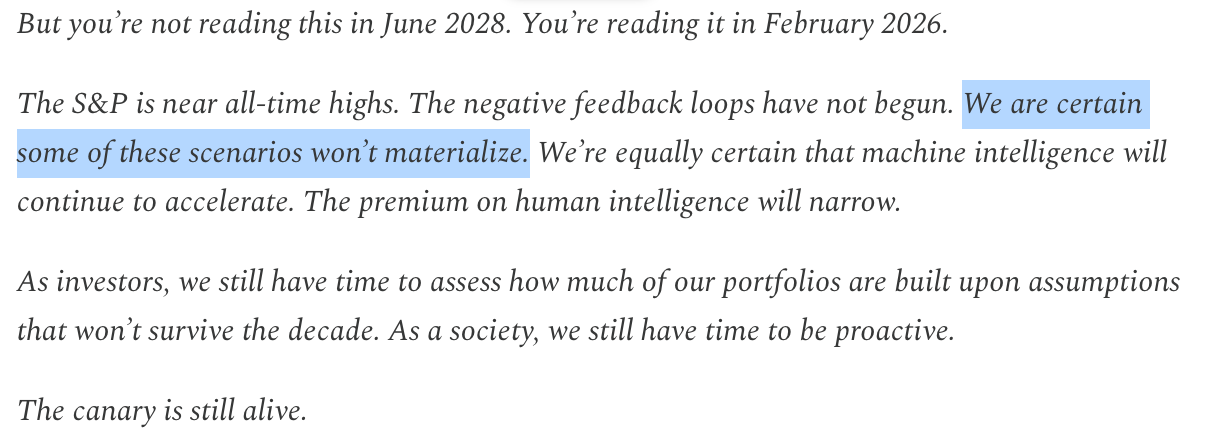
Today, if you visit the website, they now have his disclaimer:

After the AI companies used the hype to raise money, they eventually readjusted their timeline on the emergence of AGI and this report has mostly disappeared from the current AI conversation.
But fear not! The year is young and we have our next runaway hit in AI fan fiction. On Sunday, Feb 22, Citrini Research released a post called “The 2028 Global Intelligence Crisis”, which quickly went viral. It predicts a near-future scenario where powerful AI agents lead to massive spending cuts, upending various companies in diverse markets and leading to a recession.
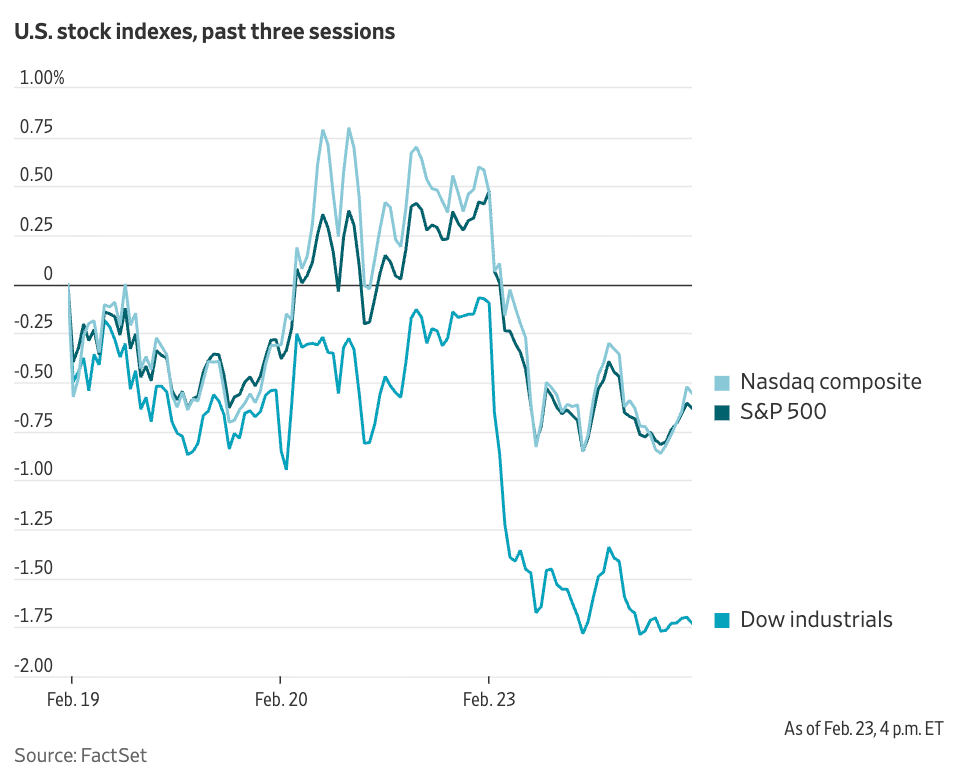
By Monday, Feb 23, as this Wall Street Journal article reports, a number of the companies mentioned in the post saw their stock prices fall. Datadog, Crowdstrike, ZScaler, American Express, KKR, Blackstone, and DoorDash took a hit.
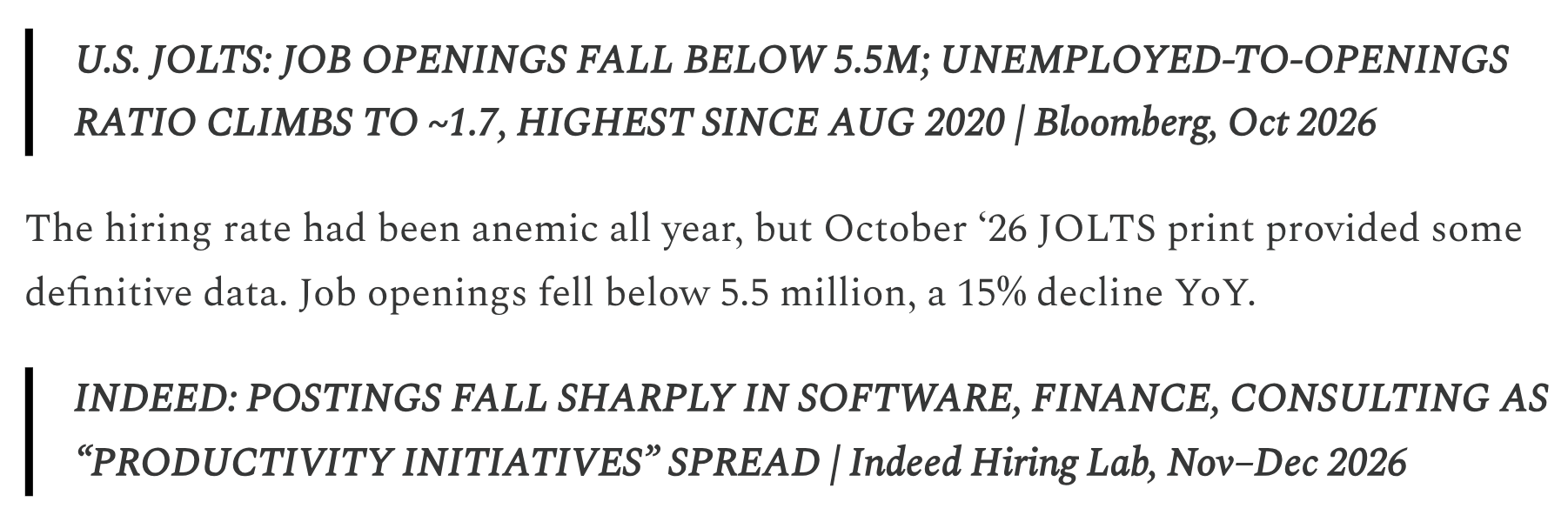
When I came across the post on Tuesday, even without knowing that it had an impact on the stock market, I was suspicious. Just like the AI: 2027 post, this one mixed plausible truths (e.g. AI will cause job losses), with fancy graphs (look how official we look!), and enough vivid details (like alarming future headlines) to stir the reader’s emotions.
Okay, we need to slow down. Whenever there are two extremes (AI doomsday versus AI no impact scenarios), the truth will inevitably reside in the middle, somewhere on a spectrum. Anything that is not a hard rule in science or math is more likely to be a both/and scenario rather than an either/or scenario.
Let me take a shot at addressing some of the implied or blatant claims in the Citrini post.
Will we have a recession?
Yes, I think there will be a recession. I think people will lose jobs. I think the rich will get richer. I can’t tell you when or the biggest reason why, but the recession will be triggered by a multitude of factors.
Here’s a not-complete list in no particular order:
America is facing an affordability crisis. Groceries and daily expenses have not decreased, despite the government’s promises
Student loan debt is getting out of control and people are risking default.
Medical bills are bankrupting a population that is aging fast and without replacement or enough caregiving.
AI will make specific inroads into specific markets (driverless vehicles, digital media, AI influencers).
The government has enabled tax cuts for the top 1%, while leaving the rest of the country holding the bag.
Gambling culture has gotten out of control. For some reason, people still believe they can beat the house in sports betting and prediction markets.
When people need real money, they will sell their cryptocurrency, causing this market to collapse
The rise of buy-now-pay-later plans are seducing customers to just add to their personal debt
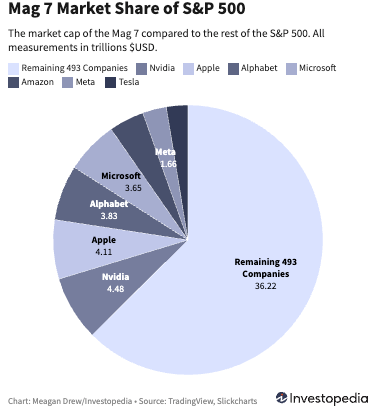
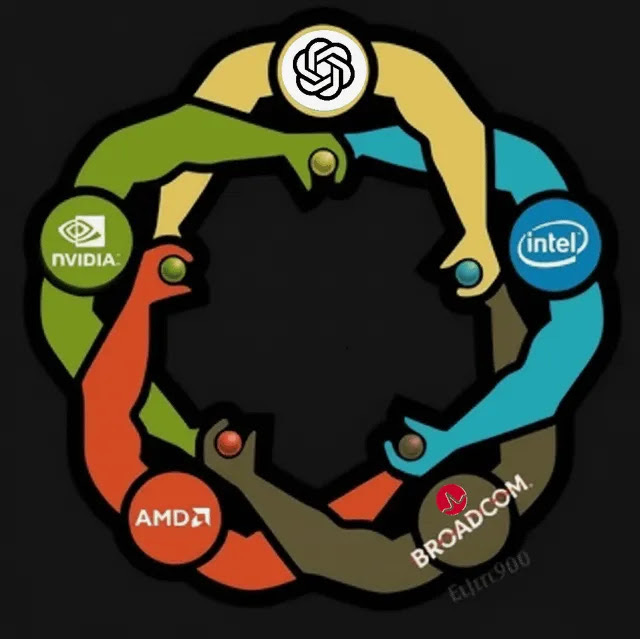
Tech companies, which dominate the stock market (NVIDIA accounts for almost 5% of the S&P 500), which participate in shady circular financing, and which have taken a billions of dollars in investors’ money will be unable to recoup the investment, leading to a dramatic sell off
Will AI Agents replace companies?
Possibly? But I think it is more likely that these large companies will adopt AI agents to take over parts of their workflow. Let’s take the case of DoorDash. The company is useful to society because it helps small restaurants and businesses, which do not have the scale or money, to provide same day delivery without having to hire full-time workers or maintain vehicle expenses. The company also provides an online platform for users to compare prices, ratings, and reviews of local restaurants. Further, it lets the restaurants post their menu online in a standard format.
What makes us think it can be replaced so easily? Most small restaurants have terrible websites, which is why they use DoorDash in the first place. The average owner of a fast food Halal restaurant in Queens, NY, a Chinese restaurant in Dothan, AL, or a diner in Fargo, ND is not going to suddenly decide to boot up their five year old Hewlett Packard laptop, download OpenClaw, and start building an AI agent to handle deliveries from the terminal window.
But how fast will people and companies actually adopt AI?
The fact that AI will be incorporated into society is undisputed. The integration is already occurring. But I think it will be slow, occur in fits and starts, and be an reliable source of pain and inefficiency. A report from MIT’s Media Lab at the end of 2025 stated:
“Despite $30–40 billion in enterprise investment into GenAI, this report uncovers a surprising result in that 95% of organizations are getting zero return. The outcomes are so starkly divided across both buyers (enterprises, mid-market, SMBs) and builders (startups, vendors, consultancies) that we call it the GenAI Divide. Just 5% of integrated AI pilots are extracting millions in value, while the vast majority remain stuck with no measurable P&L impact. This divide does not seem to be driven by model quality or regulation, but seems to be determined by approach.”
In other words, if 95% of companies are getting zero return, it signifies that we don’t know how to use AI in ways that are productive or beneficial.
I am not sure why we keep forgetting or disregarding our history, but humans are prone to bombastic levels of hubris. We are frequently wrong or irrational or overly optimistic. In the digital age, more technology does not actually mean less work. E-mail is notorious for creating more work. We write emails to organize meetings and we have meetings to plan emails.
A similar phenomenon is now occurring with AI. Managers and workers are complaining that the AI work slop generated by workers (reports, slides, emails) must often be edited, redesigned, or discarded because it appears low-effort, incorrect, verbose, strangely worded, or generic. This leads to more work and wasted time in course correction.
Perhaps I will eat my words in the future, but I also don’t see current workers actively participating in their own demise. If you are a millennial manager who hasn’t hit their peak earning years yet, why would you push for AI adoption to replace your workers when you know it can happen to you?
I actually think we are more likely to see workers replaced in organizations that mandate their workers to use AI to optimize their workflows. These companies are actually seducing their employees to automate themselves out of a job.
Additionally, some of these middle-aged managers tasked with implementing AI have children in middle school and high school. Are they going to actively sabotage their kids’ future by ensuring they do not have a job in the future? Humans don’t act technologically or economically rational 100% of the time. Sometimes we are irrational, lazy, and self-serving.
So what’s the takeaway?
Stop falling for the hype. Don’t overreact to speculation. Learn from history. Avoid making financial decisions based on fiction.
It’s amusing and scary to wonder how much of these stock market transactions are caused by AI agents or bots that come across a viral post like Citrini’s, assume it to be true, and then take a decisive action.
But if humans are making the decision to buy or sell, the same irrational and lazy humans that skim online articles and don’t bother reading to the end of a post — perhaps, next time, they should read the fine print: