
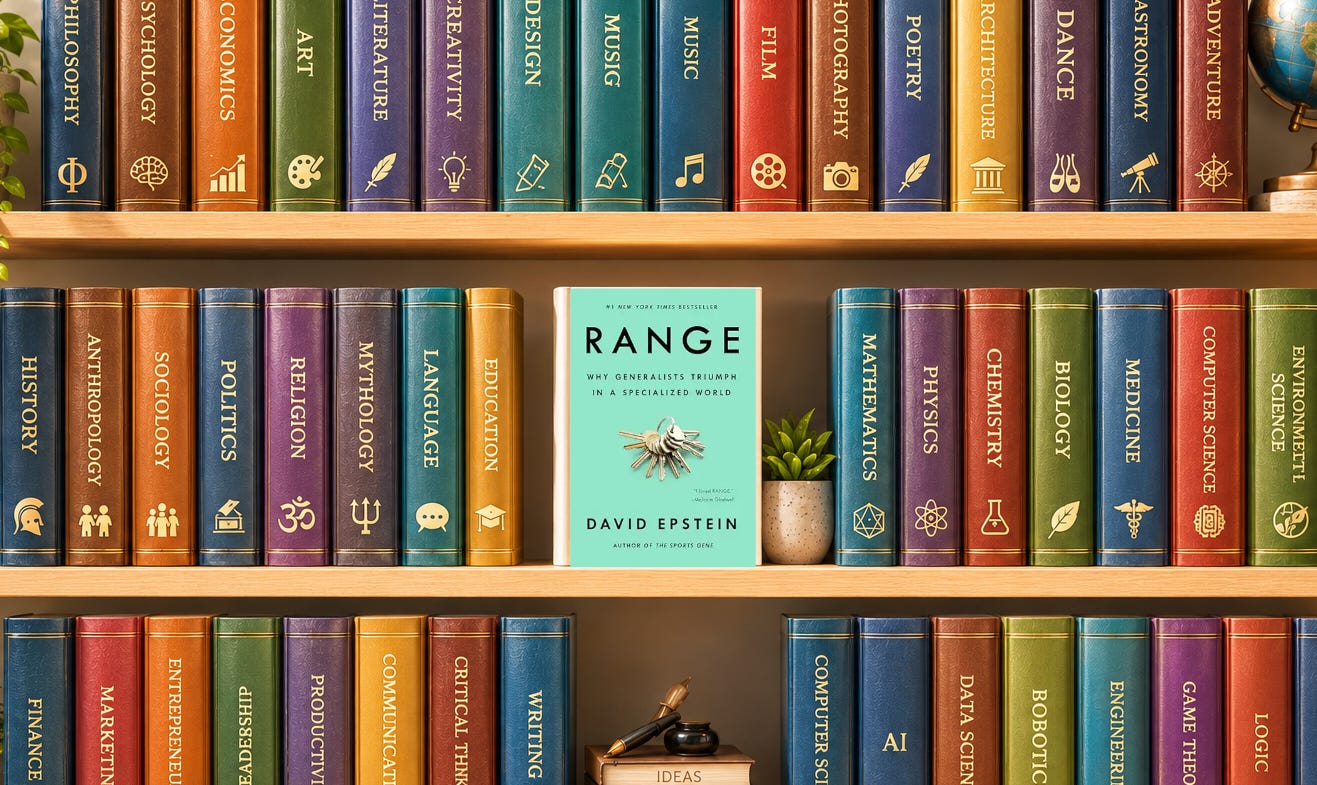
In February 2026, the co-founder and President of Anthropic, Daniela Amodei, said in an interview that “studying the humanities is going to be more important than ever.” This echoed a statement by the CEO of JPMorgan, Jamie Dimon, who recommended in November 2025 that young people should work on improving their critical thinking, emotional intelligence, and their ability to communicate and write.
Basically, the sentiment among business and tech CEOs is that as AI excels at technical and analytical jobs usually found in STEM domains, there will be a need for people who have intangible, human skills like understanding nuance, exhibiting, listening, and demonstrating empathy.
The economic pressure is only increasing now that AI is discovering cybersecurity vulnerabilities better than the best computer scientists, disproving a longstanding Erdos conjecture in mathematics, and becoming the go-to reason why tech companies are laying off thousands of employees.
The irony, of course, is that just a few years ago, jobs in science, technology, engineering, and mathematics were sure bets to a stable income. There was an explosion of interest and funding in the STEM departments at universities, while humanities programs faced elimination and liberal arts colleges were shutting down, leading to grave economic consequences in local communities. The prevailing attitude among students was that humanities degrees don’t pay, so why take those classes?
According to a 2025 report by the Academy of Arts and Sciences, they found that
“In 2024, the nation’s colleges and universities awarded 165,489 bachelor’s degrees in the humanities — the smallest number of degrees awarded since 1991 and 30% below the recent high-water mark in 2012. That decline includes a particularly sharp drop of 13% from 2021 to 2023.”
“By 2024, the humanities accounted for just 8.4% of the bachelor’s degrees awarded — the smallest share since a more comprehensive accounting of humanities degrees completions became possible in 1987.”
“Three fields experienced substantial growth in their shares of all bachelor’s degrees from 2012 to 2024: engineering (growing from 7.3% to 12.5%), health/medical sciences (climbing from 9.2% of all degrees awarded in 2012 to 12.8%), and the natural sciences (rising from 9.2% to 11.1%). All other fields experienced some loss in their share of bachelor’s degrees conferred, but the humanities had the most substantial decline from 2012 to 2024, falling by more than a third, from 13.1% to 8.4%.”
“Within the humanities, almost every discipline awarded fewer degrees in 2024 than 12 years earlier. The largest proportional drops in degrees awarded occurred in religious studies (down 59%), area studies (55%), languages and literatures other than English (48%), classical studies (43%), English (43%), history (41%), and comparative literature (32%).”

At the same time, for a variety of reasons, we are also learning that students can’t, don’t, or won’t read complete books in school anymore. They are using AI to write their essays and speed through degree programs. And in addition to any anxiety caused by social media, now they are suffering from AI anxiety as well. Even before students get to high school and college, we are seeing a drop in math and reading scores across the country. And we are finding that the reliance of AI is eroding our critical thinking skills among everyone, students to knowledge workers (an issue I plan on exploring in a later post).

Off the top of my head, there are a variety of reasons that have led to the decline of literacy:
the shortcut and reliance on AI
the COVID-19 pandemic
smartphones and social media
the loss of status, pay, and tenure of teachers and college professors
the ballooning costs of higher education
the minefield of policing what is taught in schools from both sides of the political aisle; grade inflation
the opportunities (what’s paying) and challenges (what’s not) in the job market
the quest for never-ending optimization
and so much more
These combination of factors have destroyed the elevated virtue of pursuing knowledge and wisdom for their own sake. The classic and romanticized idea of Plato’s Academy, a place where people come together to learn and debate and investigate ideas, no longer holds tremendous value in our society. Sometimes, just having these debates is fraught with controversy. Sometimes participants won’t get involved if they risk career ending cancellation. Besides, with supercomputers in our pocket and our hyper-individualized attitudes, why should we listen to what anyone else has to say about what is important to learn or to believe?
Today, it is not the university that holds a central place in American intellectual life. It is the corporation. We do not want to be philosophers and thinkers, we want to be influencers and entrepreneurs. We do not want to study the great humanitarians whose ideas have stood the test of time, we want to emulate tech CEOS, who while intelligent and innovative, also benefited from the luck of being in the right place at the right time with the right idea.
We aren’t doing the messy, time-consuming work to accumulate wisdom; instead, we are using AI to summarize, optimize, and generate platitudes of AI slop to share as content without having actually lived.
But why choose one path? Why not both? It has been my experience that taking the time to explore and learn leads to far greater insight than to just swipe through an Instagram carousel. It is far more fulfilling to wander before settling into a pursuit even if it is a longer, harder path. I am not sure where I picked up this idea in my life1, but, growing up, it had been impressed upon me that learning was an end itself. The ultimate pursuit of life was to discover meaning, truth, and wisdom. It is a never ending endeavor, but it is rewarding nonetheless.
From high school to college and beyond, I read widely, took an eclectic mix of classes, practiced random hobbies, and challenged myself in a variety of extracurriculars — even if it meant that my grades suffered a bit or my achievements were below average. Instead, although I wanted to do well, I understood that every experience contained knowledge and wisdom that may be useful later on even if it was not apparent at the time. For example, I took ceramics in college and even if I never take another ceramics class again2, the lessons I learned about planning ahead, the importance of balance in art, being patient, letting go of the final result, and enjoying the process will forever inform the projects I work on now and my philosophy of living a Good Life.
So read unusual books, join clubs outside your comfort zone, and take random classes even if it has nothing to do with your current or future career. A future physician should take classes in theater and economics, just like a future AI researcher should study philosophy and dance, and a journalist should study calculus and graphic design.
It is at the crossroads of disparate fields where innovation is born. But if you don’t know the knowledge exists, you can never make the connections or see problems from a different perspective.
Range by David Epstein
But don’t take it from me. I recently read the book Range by David Epstein. It had been sitting in my “To Read” pile for years because I identified with the premise that in a world of hyper-specialists, it is better to be a generalist. In a world where everyone has their head down trying to dig deeper into their particular niche, it helps to be able to look up every so often and appreciate how everything is interconnected. Even better, it helps to master one domain and obtain general competence is others.

This philosophy has shown up in my life choices. It is why I chose to become an emergency medicine physician, who are masters of resuscitation, yet can still take care of patients with any complaint in medicine. And while I further specialized in critical care medicine, I have sought to improve my abilities in the medical humanities, clinical informatics, entrepreneurship, and technology. Each of these skills can inform and enhance the others. It won’t necessarily show up right away, but eventually, if I keep pushing, I am certain that I will find myself making connections that I didn’t realize were there.
Here are my favorite ideas, quotes, and lessons from Range.
Desirable Difficulties - Let It Be Hard
Epstein writes that learning should be challenging, deliberate, and frustrating. He calls it: “desirable difficulties”. Achieving mastery is a slow process and learning involves making mistakes. Rather than receiving an instantaneous answer from the Internet or from an AI chatbot, rather than listen to a podcast or watch a video, it is far better for us to struggle with problems and try to figure out a solution on our own. It is better to read and write our way to answers rather than absorb them passively.
Epstein wrote this book in 2019 and I find it prescient because he writes about one type of desirable difficulty called “generation effect”, which is the idea that trying come up with your own answers to a problem, even if wrong, improves our ability to learn and remember. What I love is that he uses the word “generation,” which should obviously bring to mind generative AI, which takes all the struggle out of finding the answer. Studies have shown that generative AI erodes our ability to critically think and diminishes our creativity. So if you are going to learn anything, I hope you struggle through it.
Diversity of Experience is Important
Despite the backlash to diversity efforts in conservative spaces, studies have repeatedly shown that it is beneficial in areas as diverse as the microbiome to the boardroom to creativity to patient outcomes. Epstein found that most elite athletes, early in life, spent less time in deliberate practice in the sport that they mastered. In other words, they did not accumulate the infamous 10,000 hours of practice early in life. Instead, they underwent a “sampling period”, trying out various sports in formal and informal environments. They built a range of physical skills and learned about their own abilities on which they later built a foundation.
One of most important lessons I learned from the book, and the most motivating, was that the best scientists in the world also had a variety of creative interests. Just take it directly from Epstein:
“Scientists and members of the general public are about equally likely to have artistic hobbies, but scientists inducted into the highest national academies are much more likely to have avocations outside of their vocation. And those who have won the Nobel Prize are more likely still. Compared to other scientists, Nobel laureates are at least twenty-two times more likely to partake as an amateur actor, dancer, magician, or other type of performer. Nationally recognized scientists are much more likely than other scientists to be musicians, sculptors, painters, printmakers, woodworkers, mechanics, electronics tinkerers, glassblowers, poets, or writers, of both fiction and nonfiction. And, again, Nobel laureates are far more likely still. The most successful experts also belong to the wider world.”
This is also why I believe that every health professional trainee, whether they are techs, nurses, students, PAs and NPs, and residents should spend the first year of their training or career working in the emergency department. There is no place in healthcare that will expose you to the same dynamic and stressful environment, while allowing you to experience every major emergency, perform the initial history and physical exam of every patient, and treat nearly every disease process, while interacting with all specialties. If you want a safer hospital system, let people learn to face and manage crises, while developing their range of skills starting in the emergency department. Watch how many more lives are saved when patients code on the floor or GI suite or CT scanner if all the staff have worked in the emergency department.
Change is Good and Inevitable
Not only is the sampling period important for becoming an expert in your field, but it also helps you transition into new roles, find different opportunities, and take on uncomfortable challenges. Sometimes, we become victim to the “sunk cost fallacy.” This is the bias that prevents us from changing strategies or jobs, especially when we have spent time, money, or energy into something, because we think abandoning our path means we have wasted our efforts, even though we have already spent the resources and we can’t get it back. Sometimes we lose more time, money, and energy hanging on, rather than just ripping off the bandaid, making the switch, and getting on with our lives.
We have to understand the idea that it is okay, even preferable, to evolve and to accept that we will inevitably change, whether we want to or not. Our motivations, interests, and desires transform throughout our lives. Our ability to navigate these inevitable changes and maintain flexibility when faced with unforeseen circumstances depends on how much range we developed early in life. Knowing that we have successfully grown in the past when faced with challenges will make us more confident when we encounter new obstacles that require different solutions or force new growth.
Get Busy Living or Get Busy Dying
We often hear the advice that we should do the thing that we are most passionate about. But I like the advice of the finance professor and commentator, Scott Galloway, that the better strategy might be to follow your talent instead. Growing up, I was far more passionate about playing basketball than I was about studying math and science. Yet no amount of passion would have led me to a career in professional basketball. But I was good at solving problems, learning a lot about a little, and finding creative solutions, which I only realized after I sampled broadly.
Ultimately, we learn who we are by having experiences, joining groups, trying out new skills or personas, and developing a personal narrative and self identity that we continue to iterate over with time. We can try to think our way to a career we think we want, only to discover that it is not what we imagined it to be. Healthcare is filled with zombie-eyed doctors who imagined a career in medicine, jumped on the slow-moving train that allowed them to rise the ranks from student to physician without much thought, only to come out on the other side realizing that fighting with insurance companies and negotiating with non-compliant patients was not what they wanted to do.
Epstein recommends that rather than asking “What do I want to become?”, it is better to ask smaller questions like “Which among my various possible selves should I start to explore now? How can I do that?”
Instead of having a grand plan, he suggests performing small micro-experiments and rapidly iterate through them. Join different clubs, talk to different people, and iterate rapidly. Don’t work backward from a goal but work towards promising opportunities.
Experts Need to Start Thinking Laterally
It is not uncommon to see hospital administrators, physicians, or nurses, who are experienced and experts in their field, become so entrenched in their patterns of thinking that it becomes difficult for them to see new perspectives or try things a different way. Beware if you try to suggest a new idea. Anything that challenges their beliefs or processes is rejected and the poor soul with the unwelcome thought is treated with derision and humiliated. I have seen this happen repeatedly in my career.
Epstein points to research that shows that highly credentialed experts are more tunneled vision with experience, while also more confident that their assertions — a dangerous combination of closed-mindedness and hubris. When faced with information that their claims were correct, it was obviously due to their intelligence. But when faced with proof that their judgements were systematically flawed, it was never their fault. Some external circumstance prevented them from understanding the situation.
As science probes the edges of knowledge, experts become more specialized. The amount of time it takes to master their sub-specialized domain takes longer than ever before, so each expert digs themselves into deeper and deeper holes. The ability to make cross domain connections becomes harder to achieve.
Epstein shows that creative problem solving requires the ability to think laterally, or make analogies, across domains. Scientific labs that had researchers with diverse professional backgrounds, those with an outsider’s perspective, often made more breakthroughs because they were able to weave analogies between problems in different fields.
The medical establishment’s inability to be open-minded and question their beliefs is part of the reason why the public has a difficult time trusting the healthcare institutions. Yes, some ideas, like vaccines causing autism, are unlikely to be true. And, yes, some of the claims made by incompletely trained practitioners, like Casey Means, and unqualified government officials, like Robert F. Kennedy, Jr, deserve to be scrutinized, challenged, and debunked. But as a scientist, one must at least be curious about where their dissatisfaction is coming from. What are they reading that leads them to their particular scientific conclusions? And in places where we do not have enough scientific evidence, we must be open to exploring it, even if another one of their ideas is provably false. Just because we do not like the character of the person or we find one of their ideas incorrect, it does not mean all of their ideas have no merit. Our job is to sift through the noise.
I have seen this phenomenon on social media, where established experts in medicine, with huge followings, outright disparage and discount those with alternative medicine backgrounds or views mainly because they don’t have the same formally recognized training or credentials. Epstein reports on research that showed the most scientifically literate adults were also most likely to have dogmatic beliefs about highly politicized topics in science.
Epstein recommends that we practice scientific curiosity — we take time to explore the ideas that makes us uncomfortable. We spend time with the idea that perhaps our beliefs were wrong. Could it be that the risks of climate size were overstated? Perhaps we need the medical community to look at the human body more as a complex, interconnected system with personalized treatments rather than as an entity that needs to be divided and conquered into organ systems? We can also acknowledge that two things can be true at once: perhaps there are peptides that can increase human longevity; concurrently, buying chemicals to inject into your body from the Internet and delivered from China is probably not wise. Perhaps certain interventions can work, we just haven’t created or discovered the right ones yet. We need to at least be open to learning about them, especially if a sizable portion of the population is already practicing DIY medicine.
Conclusion
If I can make any recommendation to graduating classes of 2026 at any level, it is this: achieve specialization in one practical endeavor — computer science, medicine, engineering, law, entrepreneurship, etc. Then achieve a general understanding in many subjects. Epstein called this “T-shaped” learners. If you achieve mastery in multiple subjects, you become a π-shaped (pi) learner. Read widely. Develop the ability to talk about and discuss any topic at any dinner table or cocktail party. Go deep in one thing but have a broad understanding how other domains function and feed off one another.
Read as much as you can. The Wall Street Journal recently reported that the era of ‘Dad books” is coming to an end — that is people aren’t reading biographies or about history as much as they are reading self help. This is a shame. One of the best ways to understand success is by learning from the lives of the people who have already achieved what you want.
Write your thoughts down. If you want to test if you understand a subject, write about it and test how clearly you can create sentences to explain the nebulous thoughts in your head. Writing is thinking. A recent study that looked at people who relied on AI on writing found that the people who used it for the foundation of their work remembered little to nothing about what they wrote, while those who used it as a supplement had better recall, and those who didn’t use it at all had the most command of what they wrote.
Get in front of people and talk. It is notoriously hard and one of people’s biggest fears. I have blanked on stage before and discovered that no one remembers your public speaking failures except you3. Nearly everyone who speaks for a living has bombed on stage. It is part of the process. But if you can command a room with your voice and hold their attention, it is a super power. When AI can mimic nearly every digital art, live performance will be a premium — and that includes the ability to speak to an audience.
Finally, play the long game. Fall in love with learning. Aim to be 1% better every day. We only live once so work on achieving your maximum potential, while realizing it is the process and people along the journey that matter most. It is the small wins that exponentially accumulate over time that can build you up physically, emotionally, spiritually, cognitively. Developing range will protect you in our new AI-driven economy.
Probably from some combination of my parents, my teachers, and my love of books
Which would actually be a tragedy
unless you are Joe Biden